Wednesday, May 4, 2022

Blog Post #10 - Whistleblowers EOTO Response


After listening to my peers' presentation, I learned a few things about whistleblowers. A whistleblower is a person who reveals information about an organization that is deemed illegal, fraudulent, or immoral. Whistleblowers are extremely important in a society, without them a lot of information we now know would never have been found. A great example of a whistleblower is Julian Assange. Mr. Assange leaked a video of the U.S. military shooting innocent civilians and reporters. Without whistleblowers, officials in power could do what they want with no fear of retribution.

Whistleblowers also help out the journalism industry. It is found that whistleblowers and journalists have a complementary relationship. Without journalists, whistleblowers would not have anyone to publicize their information and without whistleblowers, journalists would not have many of the intriguing articles they have today. 

One famous whistleblower is a woman by the name of Karen Silkwood. In 1974, she discovered an incredible amount of health code violations at the Kerr-McGee nuclear power plant in Oklahoma. Among these health violations, there were high levels of nuclear contamination. When testing herself, she found that her body contained 400 times the legal limit of plutonium contamination. Without Karen Silkwood, this company might’ve continued to thrive in worsened conditions. 

Another famous whistleblower is John Kophinski. In 2009, Mr. Kophinski discovered that the company Pfizer was engaging in the off-label marketing of Bextra. Bextra is a painkiller and it was being sold in dangerous doses for unapproved and unsafe uses. This became the second largest healthcare fraud settlement to date. Who knows what kind of damage this company could’ve done without the bravery of John Kophiniski. 

There are serious risks that come with whistleblowing. Some include but are not limited to, unemployment, harassment, and ruined reputations. However, there are laws that protect whistleblowers. OSHA has more than twenty laws protecting whistleblowers. one of which prohibits retaliation against employees who complain about unsafe or unhealthful conditions or exercise other rights under the Act.


Blog Post #9 - Cable News

On June 1st, 1980 The Cable News Network, or CNN, made it debut regarding the attempted assassination of a civil rights leader Vernon Jordan. This network became the world's first 24-hour television news station. 

CNN was founded by Robert "Ted" Turner who was an outspoken businessman and nicknamed "Mouth of the South." Robert Turner also founded the Turner Broadcasting System, TBS, and Turner Network Television, TNT. 

While CNN did have a rough start at first, and was referred to as the "Chicken Noodle Network," it quickly became the only TV news station to provide live coverage of the 1986 explosion of the Challenger. Five years later, CNN again defeated other networks with its live telecasts of the Persian Gulf War. 

While technology is expanding and allowing the world to experience new ideas like live news, we see something called the CNN effect come into play. The CNN effect, "is a theory that 24-hour news networks influence the general political and economic climate".

24-hour news has been seen to prompt a stronger reaction from investors and consumers and seen to cause overreactions in the market. For example, a news station could be covering regular coverage of the turmoil in the banking industry which might result in investors withdrawing from their bank stocks. 

It has also created an increasingly competitive journalistic market. With news being reported so quickly, reporters and journalists find themselves in a race for the story which has resulted in misreporting and disputes. 

With information being available with the click of a button, increased attention was paid to scandals. It became increasingly easy to find "dirt" on others which caused major divisions among people. 

For a couple years, CNN appeared untouched by other networks. However, in 1996 a network called Fox News was born to challenge CNN. Fox News was founded by Robert Murdoch, who was a conservative and opportunist. He originally sought out to buy CNN, however when that failed he decided to launch his own news network that was a "fair and balanced" alternative. Fox emphasized nationalism and quickly became more addicting and dramatic than CNN.

This is where we see the Fox effect come into play. This effect states that if CNN is liberal and made the world larger for all its transnational perspective, Fox balanced it out by reporting more nationalistic and conservative views. This is really where we see a division in networks arise and choose which side of government they want to support. 

Even today, we can see a huge difference between the two networks. For example, when looking at the frequency of subtopics between Fox and CNN, Fox reports 10 times more about the negative consequences of "extreme" racial protests than CNN.

Another example would be both stations covering information coming from (then president) Donald Trump regarding the outbreak of COVID-19. On CNN’s screen, you can see, “Trump melts down in angry response to reports he ignored virus warnings.” However, on Fox’s side, it simply reads, “Trump: 115,000 tests per day”. 


This has been seen to cause serious problems. Most people only watch one news source, which means they only see one biased side of the story. This has only contributed to the divisions among American citizens. If someone is only watching the conservative side, then they are only going to believe that side. This is why we see so much tunnel vision and intense political beliefs. 

In the end, 24-hour news helped create widespread information that catered to viewers. However, it also created a lot of bias based on what news station one decides to watch, which resulted in major divisions across the country.

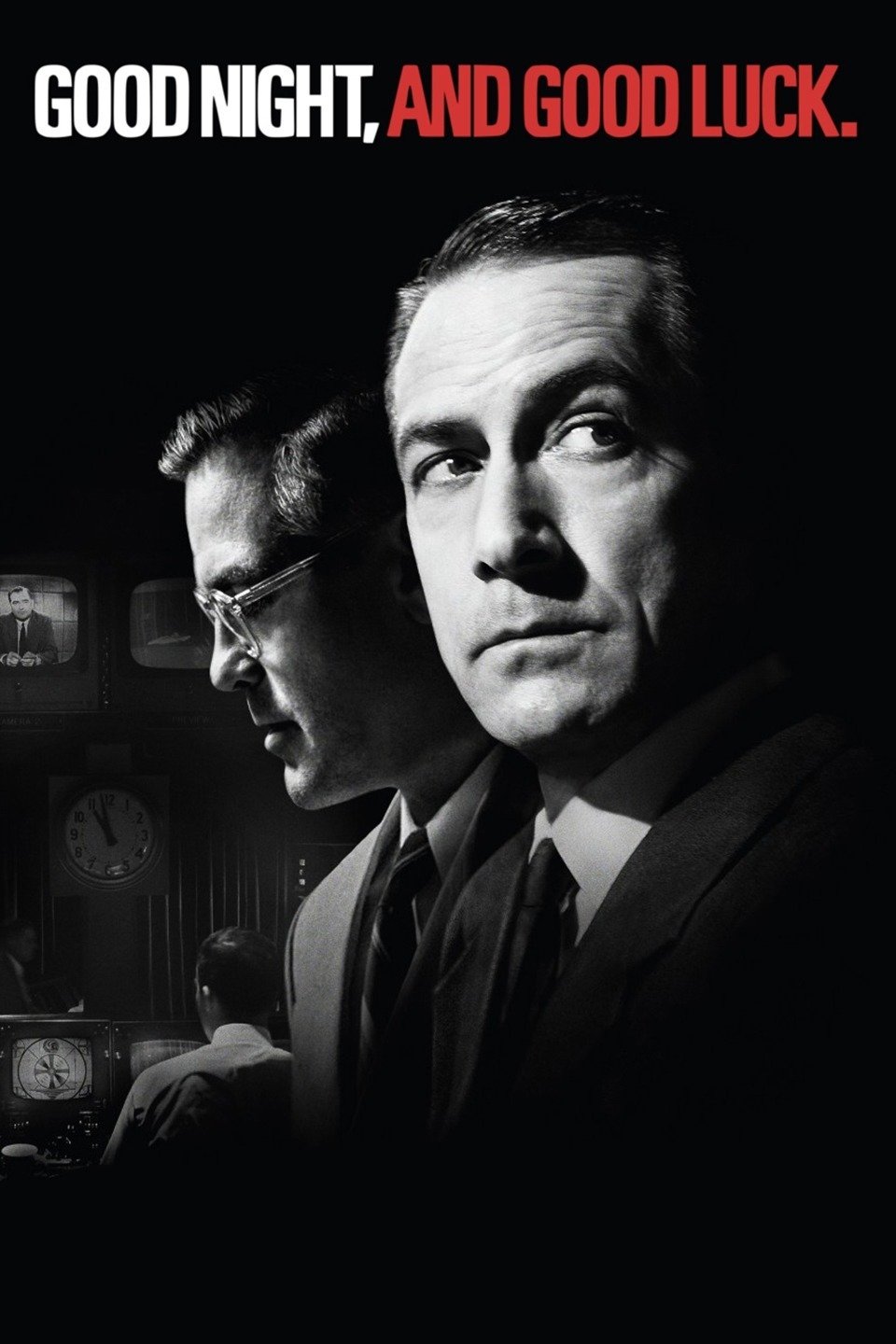
Blog Post #8 - Goodnight and Good Luck

    The movie "Goodbye, and Good Luck" was written by George Clooney and Grant Heslov and stars David Strathairn, Patricia Clarkson, George Clooney, Jeff Daniels, Robert Downey Jr, Frank Langella, Tate Donovan, and Ray Wise.

    This movie takes place in the 1950's during the time of Communism and the paranoia it caused in the United States. The person who was exploiting those fears was the senator of Wisconsin named Joseph McCarthy. One CBS reporter named Edward Murrow and his producer Fred Friendly make it their mission to take a stand and expose Senator McCarthy.

    When in the newsroom, trying to decide on a piece for their next show, someone mentions an air force officer who was dismissed because his father was claimed to be a communist. At his trial, all of the evidence and his charges were in a sealed envelope that no one saw. The officer's rights to a fair trial were violated because he did not know the charges against him and was still found guilty. When they reported this story, they were met with a lot of backlash.

    The crew then decides to make a direct attack on McCarthy. They decide to run a story on a senate hearing on a woman who supposedly works in the pentagon and is a communist spy. However, there were many things wrong with this hearing. The woman did not work in the pentagon and denies communist ties, McCarthy leaves the hearing after a couple questions, and they got her name from a communist mailing list but there are three other people with her name in the phone book. When they bring these things up they offer McCarthy the chance at a rebuttal. 

    McCarthy takes them up on their offer and uses his time to accuse the reporter of having ties to the communist party. Of course, all of these accusations are false. Therefore, the Senate decided to launch an investigation on McCarthy.

    This movie was made to show that as journalists it is their job to keep the public informed of what is truly going on in the world, no matter how bad. 

Blog Post #7 - Emily Faithful EOTO Response

    After listening to my peers' presentation on Emily Faithful, I learned a couple things. She was a female journalist that spread liberal feminist politics through journalism during 1835. She was also a founding member of The Langham Place Circle which advocated for legal reform regarding women's rights with heavy importance on women's employment, and more availability of educational opportunities for girls and women. They also became increasingly aware of the existence of prostitution and overall the need to help those that are oppressed.

    She was also a part of The English Woman’s Journal which was created in 1859. It was the first monthly magazine to be published by an organized feminist network in England. Their articles involved employment, education, volunteering, notable women, and poetry. This signaled a new era in feminist writing, women’s journalism, and attitudes towards women’s employment.

    A scandal occurred with a high-class admiral and his wife, after which sexual assault charges were brought to light by Emily Faithful. T
he charges were dropped as Emily Faithful’s affair with the admiral’s wife came to light. Her reputation was tarnished and she was shunned by both the Langham Place Group and the Victoria Press. She would still continue to publish articles and essays regarding women’s suffrage.

Blog Post #6 - Muckrakers

    A muckraker is defined as, "a person who searches for and tries to expose real or alleged corruption, scandal, or other wrongdoings, especially in politics". Muckrakers were investigative reporters, journalists, and photographers who wrote about injustice and corruption in the Progressive era, which is between 1890 and 1920. This era was a time of intense social and political reform that aimed to make progress towards a better society. 

    A muckraker was any group of American writers that identified with pre-World War 1 exposé writing and reform. They exposed corruption and injustice in big businesses and the government. Their main goal was to, "raise awareness of social injustices, inequality, corruption, and the abuse of political power in order to bring about reform".  Muckrakers provided accurate and detailed journalistic accounts of economic and political deceit and social hardships caused by substantial businesses in a rapidly industrializing country.

    President Theodore Roosevelt was not a fan of muckrakers, because he thought they took things too far and coined the term himself in his 1906 speech entitled "The Man With the Muckrake." In this speech, he compared these reporters to a specific passage in John Bunyan's "Pilgrim's Progress" that highlights a man who raked muck for a living instead of looking towards heaven. Muck is defined as dirt, manure, soil, etc.

    Some of the first people to be considered muckrakers were Lincoln Steffens and Ida Tarbell. In 1902 Lincoln Steffens published an article in Mcclure's magazine called, "Tweed days in St. Louis." In this paper, he exposes the fact that city officials worked with big corporations in order to maintain power while corrupting the treasury.  He did not stop there, he later released a book with a collection of his articles called "The Shame of the Cities".  This collection caused a public exclamation that demanded reform to the city government and allowed progressive ideas to take hold.

    Shortly after Lincoln Steffens, Ida Tarbell wrote her 19-part McClure series called, "History of the Standard Oil Company".  In this paper, she outlined John Rockefeller's rise to power and his business practices. At this time he had a monopoly in oil which she effectively broke up by releasing damaging internal documents. It is believed that her motives were somewhat personal since her father and dozens of other small oil producers were driven out of business because of Rockefeller.

    One honorable mention is a muckraker by the name of Upton Sinclair. Sinclair was a socialist and wanted to bring the effects of capitalism on workers in the meatpacking industry to light. He wrote a novel entitled, "the Jungle," which detailed workers sacrificing their nails and fingers by working with acid. Many also caught diseases, lost limbs, and had to work in cramped and cold conditions. Sinclair also uncovered secrets about the products being sold to the public. Some things he reviled were, rats climbing over the meat and leaving excrement behind, spoiled meat was covered with chemicals in order to hide the smell, and skin, hair, stomach, and ears were ground up and packaged as head cheese. Within months, Congress passed the meat inspection act and the pure food and drug act to combat this issue.

    Muckraker also brought to light the issue of race. Ida B. Wells was an African American journalist that was born into slavery in Mississippi in 1862. In 1892, Wells published a book named, "Southern Horrors: Lynch Law in all its Phases".  This highlighted the systemic oppression of southern African Americans and even some poor Caucasians. Later, in 1909 she became one of the founders of the National Association for the Advancement of Colored People

     Muckrakers played an important role and changed society in a beneficial way. Without them, the world would not be as we know it and many of these injustices would still be going on today. They stood up for what is right and knew that America could and would do better.

Blog Post #5 - Civil War Press and Fake News

    The Civil War is actually considered to be the first technologically-documented war. This is in part due to the fact that there were more developments in printing technology and the switch from cloth to paper, which made printing cheaper and production faster. 

    Even though there was still some advance left for the press, that did not mean there was a lack of false and or fake news. This concept of misinformation took place long before the Civil War, by what first was the word of mouth and storytelling those opinions, thoughts, and stories of others became widely available to the public.

    During the Civil war era, newspapers rarely included the reporters' names in an article like today. Instead, the newspaper was considered more of a collective voice so the reporters were anonymous which created a lack of accountability. This in turn made it easier for reporters to slip in fake articles and news. 

    During the war, reporters with the army were called correspondents. Their jobs were to gather information from officers in command in order to write their stories. However, many also included their own opinions as to how things were going which lead to even more false information. 

    Reports of the war in the North and South entailed “facts” that heavily differed from each other. Some newspapers were known to report false casualty rates and results of battles to boost morale. Confederate troops even received much of their information through newspapers because their commanders would refuse to relay reports of Union achievements.

    Another example of false news would be on May 18th, 1864, two New York City papers released information stating that president Lincoln announced a draft for 400,000 new soldiers. The problem with this is that Lincoln made no such announcement. 

    When looking at the bigger picture, not all fake news is bad news. Around 1863, two Democratic journalists from the New York World anonymously published a 71-page pamphlet called, Miscegenation: The Theory of the Blending of the Races, Applied to the American White Man and Negro. This paper's intention was to idealize a potential future where black and white Americans could live together unrestricted across racial lines. 

    These two writers were attempting to convince white readers that even abolitionist Republicans supported the contents of this paper. They did this by adding an appendix with direct quotes from real abolitionists, implying that they endorsed miscegenation. 

    They even published a photo drawing called “The Miscegenation Ball.” In this picture, all the men were white and dancing with black women. The caption to this photo stated that it was an accurate portrayal of a certain Republican event, which was completely false. However, they were willing to take a gamble to ensure rights for all. 

    Overall, false news can be used to both help and hurt citizens. On one hand, it has started wars, provided false harmful information, and has been used to tear those apart rather than together. Fake news on the other hand has also helped abolish inequality, giving those that read some peace of mind and helping expose those who may be taking advantage of others. It ultimately all comes down to who holds the pen and paper. Whose opinion will you be reading, and what opinions you have of your own.

Wednesday, February 23, 2022

Blog Post #4 - The Liberator EOTO Response

After listening to the presentation about The Liberator, I learned a few things: 

The Liberator was created by a man named William Lloyd Garrison. He was born in December of 1805 and lived in both Newburyport, Massachusetts and New York City. During this time, he was a famous journalist and a passionate abolitionist who deeply cared about equal rights for all. 

One of his big passions was trying to help end slavery and make a change to the injustices of inequality. The Liberator was a newspaper that had many articles that fought for freedom of slaves as well as general equality among people. Most of his subscribers for The Liberator were free African Americans and fellow abolitionists who wanted to also fight. Many of these people believed in his cause to end slavery and therefore spread the paper more.

The main focus of Garrison's papers was to form a platform for other abolitionists to speak on equality, slavery, and politics. Each issue also had a special illustration. The first published article from the Liberator was on January 1, 1831 and the paper survived due to the amount of black subscribers to it.

All of its editing and publishing was done in Boston and so The Liberator encouraged black voters in Boston to vote. This helped many African Americans to gain trust in white abolitionists and also encouraged them to further their education in order to read the paper. 

All in all, the Liberator made an impact in the way that many different people viewed others and it helped shape the way inequality and slavery was handled in the US.

Blog Post #12 - Walter Cronkite

Early Life In 1916, Walter Cronkite was born in St. Joseph Missouri. As a little boy, he realized he wanted to become a journalist by readin...